


Choose payment terms that protect cash flow: a decision matrix for small businesses
A decision matrix mapping client risk, industry norms and pricing power to term choices, with example policies (discounts, milestones) and negotiation scripts.

Actionable invoicing tips, payment collection strategies, client communication best practices, financial insights, and SaaS billing automation advice for small business owners and freelancers.
A decision matrix mapping client risk, industry norms and pricing power to term choices, with example policies (discounts, milestones) and negotiation scripts.

A decision framework for what to automate vs keep human, exception queues, reconciliation checks and monitoring KPIs — with a sample rulebook and escalation runbook focused on affordable SMB controls.
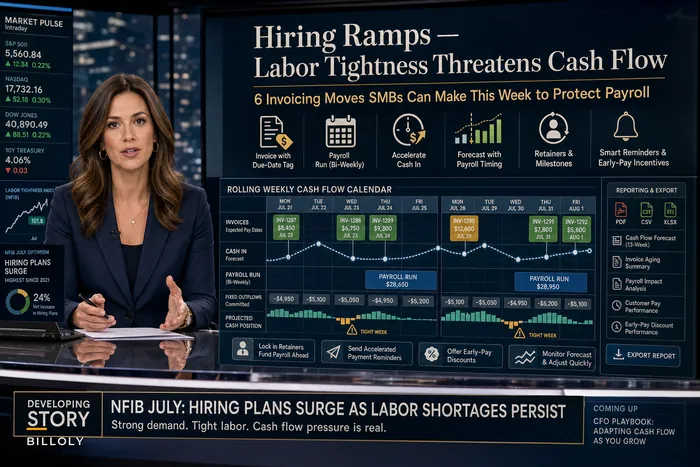
Actionable checklist of six invoice- and process-focused steps — tightening payment terms, using retainers/milestones for new hires/projects, accelerating reminder sequences, updating forecasting to include payroll timing, adjusting discounts/late fees, and export-ready reporting — to protect cash flow as businesses expand payroll in a tight labor market.
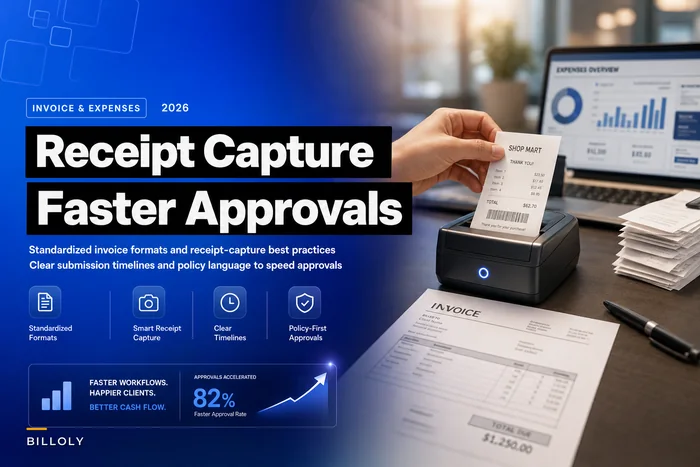
Standardized invoice formats, receipt-capture best practices, submission timelines and policy language to speed approvals and reduce disputes for reimbursable expenses.
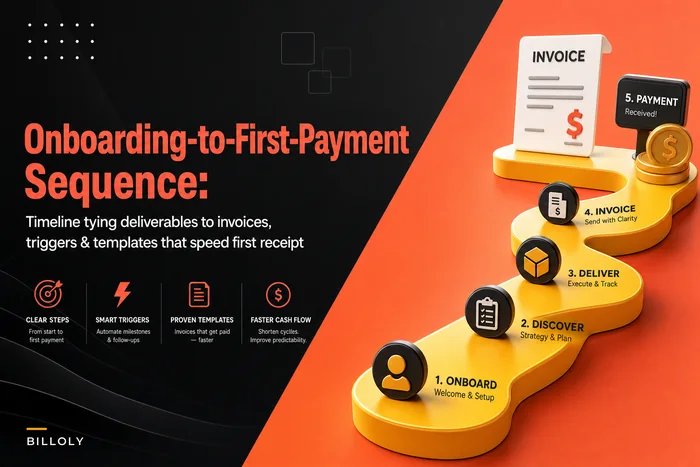
A step-by-step onboarding timeline linking deliverables to initial invoices, communication templates and payment triggers to reduce time-to-first-payment for freelancers and small teams.

Concrete milestone examples, escrow and interim-invoicing options and contract clauses that balance client trust with vendor cash protection for long projects.
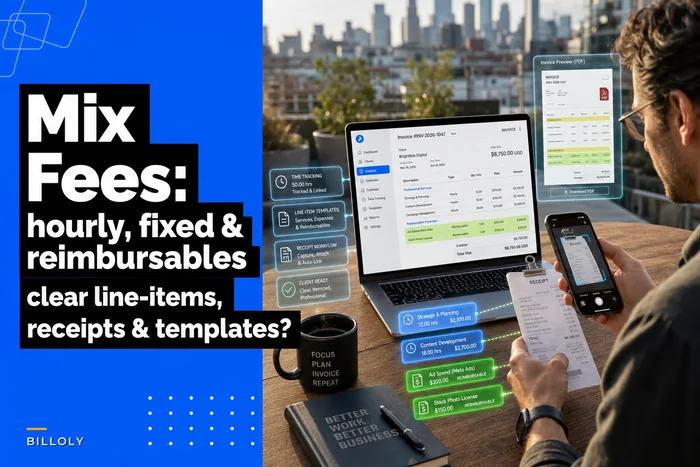
Tactical templates and a stepwise workflow for presenting mixed billing: line-item structure, time-tracking tie-ins, receipt workflows and dispute-avoidance displays.

A minimal, pragmatic invoice schema plus tagging taxonomy and export-policy tailored for SMB stacks, with QuickBooks/Xero/CSV examples and mapping templates to prevent reconciliation pain and speed audits.
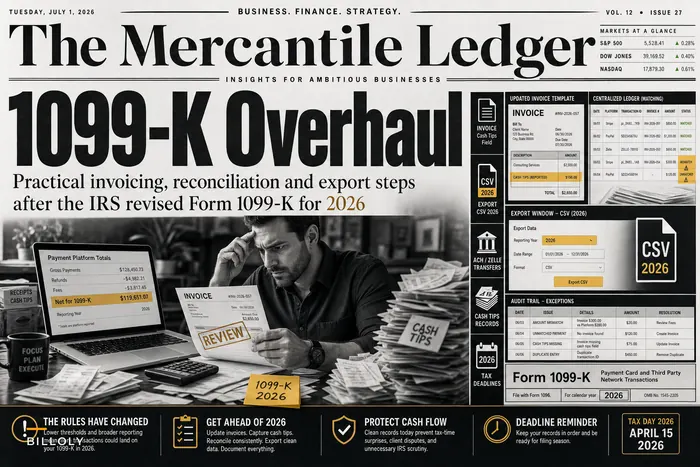
Actionable checklist for updating invoicing templates, data capture, reconciliation routines, and exports so small businesses can match platform-reported 1099-K data, capture new fields (e.g., cash tips), and avoid tax/reporting mismatches for 2026.