
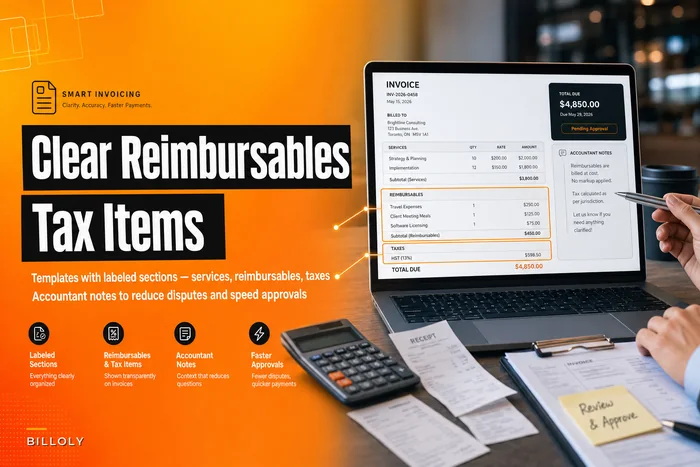
Present reimbursables and tax items on invoices clearly: templates for clients and accountants
Template examples with labeled sections (services vs reimbursables vs taxes) and accountant-facing notes to reduce disputes and speed approvals.

Actionable invoicing tips, payment collection strategies, client communication best practices, financial insights, and SaaS billing automation advice for small business owners and freelancers.
Template examples with labeled sections (services vs reimbursables vs taxes) and accountant-facing notes to reduce disputes and speed approvals.

Guidance for non-SaaS service businesses on retainer models, phased subscriptions, billing cadences and contract language designed to reduce churn and billing disputes.

A runnable method showing which invoice metrics to extract (aging, promised dates, partial payments), a simple weekly model and a checklist solopreneurs can run each week to forecast cash flow.

Following the Fed's recent minutes signaling possible further rate hikes, small businesses should proactively tighten invoicing and collections to protect cash flow. This post will outline seven practical changes — from upfront retainers and milestone billing to tightened payment terms, automatic reminders, adjusted discount policies, and reporting tweaks — with quick steps and template references.

A prescriptive escalation playbook with specific timings, email/SMS scripts, thresholds, third-party escalation rules and sample timelines for small portfolios to improve recovery rates.

Sample schedules, contract clauses and invoice templates for retainers, deposits and milestone billing that protect cash flow and tie payments to deliverables.

A systems-level playbook small teams can copy: role handoffs, approval triggers, templates, reporting cadence and an escalation checklist to run internal invoicing with minimal overhead.

A jurisdiction-agnostic checklist of invoice fields, retention rules, export workflows and an audit-ready process tailored to small-business constraints.