

The moment a good client says "I can't pay the full amount right now," you're standing at a fork most small businesses handle terribly. Say no and you might lose a relationship worth thousands over the years. Say yes without structure and you've just turned a receivable into an interest-free loan with no repayment schedule, no accounting trail, and no way to tell the next client why they can't get the same deal.
The businesses that handle this well don't improvise. They have two or three payment-plan templates ready, a simple rule for who qualifies for which one, and a clear way to book the whole thing so their revenue numbers don't lie to them. That's what this post is about — not the collections chase, not the reminder cadence, but the specific decision of how to structure a payment plan when a client goes soft on cash.
The real problem isn't the plan — it's improvising a different one every time
Here's the pattern that quietly hurts service businesses. A client emails saying money's tight. The owner, wanting to be decent about it, replies with something like "no worries, just send what you can when you can." Feels generous. Feels human. And it works fine — until three months later when that same client has paid 40% of the invoice in random dribbles, there's no agreed end date, and you have no clean way to say the balance is overdue because you never defined what "on time" meant.
Multiply that by four or five clients across a year and you've built an accidental portfolio of informal, undocumented, unenforceable debt. Nobody feels bad about being slow on a payment plan that has no schedule.
The second version of this problem is inconsistency. You give one client 6 months interest-free, another gets 3 months, another gets a discount for paying half up front — all decided in the moment based on mood and who asked nicely. Then two of those clients talk to each other, or one of them comes back next year expecting the same terms, and now you're stuck. What tends to happen across small operations is that the inconsistency damages relationships more than a firm policy ever would. People can accept a rule. They resent a deal that someone else clearly got better.
So the fix is boring and effective: pre-build the plans, set the rules for who gets which, and stop deciding under pressure.
Three tiers that cover almost every distressed-client situation
You don't need ten templates. You need three, matched to how serious the client's cash problem actually is and how much they owe. The goal is to have the right structure ready before the awkward conversation, not to draft one during it.
Stop chasing payments and start automating your billing.
Billoly empowers you to create, send, and track invoices effortlessly while maintaining professional client relationships.
- Customizable invoice templates
- Automated payment reminders
- Real-time payment tracking
No credit card required
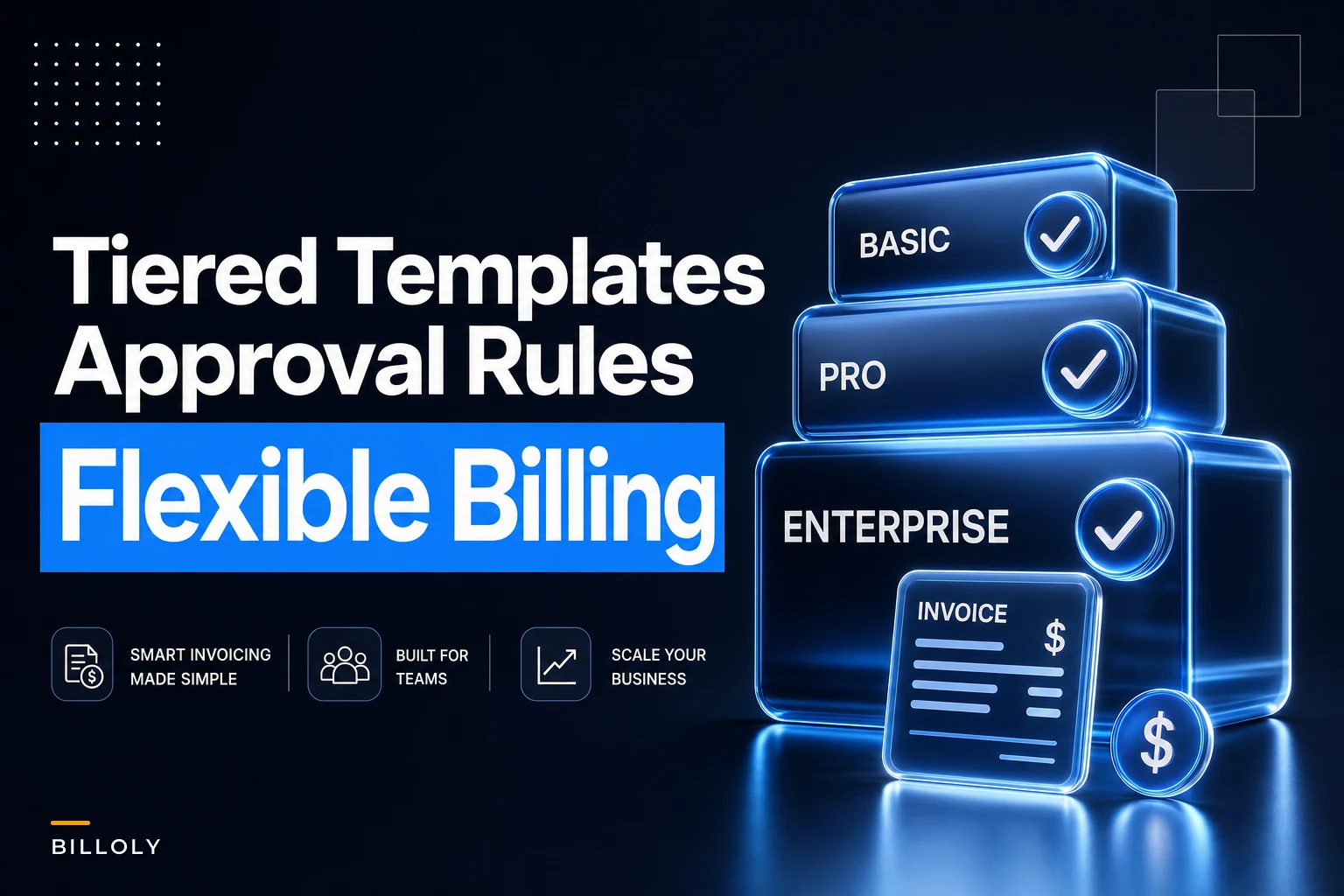
Here's the tier structure that tends to hold up in real operations:
| Tier | Best for | Structure | Down payment | Term | Fee / interest |
|---|---|---|---|---|---|
| Tier 1 — Short Split | Small balances, temporary cash gap | 2–3 equal installments | 33–50% now | 30–60 days | None |
| Tier 2 — Structured Plan | Mid-size balances, real strain | 4–6 monthly installments | 20–25% now | 3–6 months | Optional small admin fee or modest interest |
| Tier 3 — Hardship Plan | Large balance, serious distress | Custom, lower monthly amount | Whatever they can manage | 6–12 months | Late-payment penalty clause, possible partial forgiveness |
A few things that matter more than they look.
-
Always require something up front.
-
Equal installments beat vague amounts.
-
Tier 3 needs teeth.
Even Tier 3. The single most predictive signal of whether a payment plan gets honored is whether the client puts any money down at the start. A plan with $0 down is a wish. A client who pays even 15% today has shown they can and will pay. This one rule filters out a surprising number of "I'll pay you next week forever" situations.
"Pay what you can each month" sounds flexible but it's actually a trap — it removes the anchor and every month becomes a negotiation. Fixed amounts on fixed dates give both sides something clean to track.
The hardship plan is where owners get soft, and it's exactly where you need the most structure. A late-payment penalty clause and a clause that says the full remaining balance becomes due immediately if a payment is missed (an acceleration clause) isn't cruel — it's what keeps a 12-month plan from quietly stretching into 24.
Approval rules: who decides, and how fast
The template is only half of it. The other half is knowing which client gets which tier without an argument every time. If you're a solo operator this lives in your head, but write it down anyway — because "written down" is what makes you consistent when you're tired and just want the conversation to end.
-
Check the relationship history. Has this client paid on time before? A client with two years of clean payment history and one bad month is a completely different risk than a new client who's already slow. History earns better terms.
-
Check the balance size against your cash needs. A $600 balance you can float. A $6,000 balance you can't. The tier should partly reflect your ability to wait, not just their ability to pay.
-
Set an auto-approve threshold. Small balances on Tier 1 — say anything under a few hundred dollars split into two payments — shouldn't require anyone to "approve" anything. Just send the plan. Save your decision-making energy for the bigger, riskier cases.
-
Require a signature above a threshold. Anything at Tier 2 or above gets a short written agreement, even one paragraph, that both parties confirm. Email confirmation counts. A verbal "yeah that works" does not.
-
Cap the concession. Decide in advance the most you'll ever bend — no plan longer than 12 months, no interest-free period beyond 90 days without a fee. When you have a ceiling, you stop negotiating against yourself.
The point of the framework isn't bureaucracy. It's that when a good client asks for help, you can respond within the hour with something concrete instead of stewing for three days and sending an apologetic, mushy reply that helps nobody.
The part everyone gets wrong: how a payment plan hits your books
This is where the accounting genuinely matters, and it's the section most "payment plan templates small business" articles skip entirely.
-
Don't reissue the invoice as smaller invoices. That corrupts your original record and makes reconciliation a nightmare later. Keep the original invoice intact and record each installment as a partial payment applied against it. Your outstanding balance should always tie back to that one document.
-
Track the plan separately from your normal aging. A client on an agreed 6-month plan is not the same as a client who's 90 days delinquent, even though the raw aging report will lump them together. Flag payment-plan receivables so your overdue numbers stay honest — otherwise your collections priorities get distorted and you end up chasing people who are actually paying as agreed.
-
If you offered partial forgiveness, book it as a write-off, not a discount on the original sale. Say a $5,000 balance where you agreed to accept $4,200 as final settlement. That $800 is a bad-debt write-off. Recording it correctly matters for your tax picture and keeps your revenue history accurate.
-
A down payment collected before delivery is deferred revenue, not earned income, until you do the work. If you're restructuring an unstarted project into a plan, that up-front money sits as a liability until earned.
Pro-tip: Flag payment-plan receivables in your software so aging reports stay honest.
The reason this section matters: a lot of owners quietly feel poorer when a client goes on a plan, so they mentally write the money off and stop tracking it hard. The books should reflect reality — the revenue is still yours, it's just arriving slowly, and it needs to be watched as carefully as anything else you're owed.
When a payment plan actually makes sense
Not every slow-paying client deserves a structured plan.
Use one when:
-
The client has genuine history and the distress looks temporary — a delayed contract of their own, a seasonal dip, a one-time cash crunch.
-
The balance is large enough that losing it hurts, and the relationship is worth more than the friction.
-
You can actually afford to wait for the money on the schedule you're offering. You're not putting your own rent at risk to be nice.
The balance is large enough that losing it hurts, and the relationship is worth more than the friction.
When it's a bad idea
A payment plan doesn't fix a quality complaint. Resolve the dispute first, or you'll be collecting installments on something they'll try to claw back later.
-
They've broken a plan before. A client who already blew up one payment arrangement has told you what happens next. Second plans should be rare and stricter.
-
The balance is tiny. Setting up a formal 6-month plan for a $200 invoice costs more in administrative attention than it's worth. Either write it off or hold firm on a short split.
Who should not offer these at all
If your business runs on thin cash reserves and can't survive a client stretching payment over months, be honest about that. Sometimes the right answer is a firmer stance up front — deposits, milestone billing, shorter terms — so you never end up in the distressed-client conversation in the first place. A payment plan is a tool for businesses with some cushion to extend. If you have none, don't extend cushion you don't have.
A real scenario
A two-person branding studio had a retail client owing about $7,400 on a completed identity project. The client's own funding round slipped and they emailed asking for "some flexibility."
The old version of this studio would have said "pay when you can" and spent the next four months anxiously refreshing their bank app. Instead they had a Tier 2 template ready. They offered: 20% down ($1,480) within five days, then five monthly payments of just under $1,200, documented in a one-paragraph email agreement that all parties confirmed. They flagged the receivable as an active plan so it stayed out of their overdue bucket.
The client paid the down payment in three days — the clearest possible signal they were serious. Over the next five months, four payments landed on time; one came a week late, and a short reminder cleared it. The studio collected the full $7,400, kept a client who's since sent two referrals, and never once wondered where they stood, because the plan and the books agreed with each other the whole way through.
The difference wasn't generosity. Both versions of the studio were generous. The difference was that one had a structure and the other had a vibe.
Keeping the whole thing coordinated
The hidden cost of ad-hoc payment plans isn't the discount you give — it's the mental overhead of tracking half a dozen custom arrangements while running everything else. Which client is on what schedule, who's due this week, which balance is a real plan versus a real delinquency. This is exactly the kind of tracking that quietly eats hours and produces mistakes.
Operational software earns its place here. When each installment stays tied to its original invoice, agreed plans separate cleanly from overdue balances in your reporting, and installment reminders go out automatically, you stop being the person who has to remember everything. AI-powered operational platforms handle that coordination well — not because the underlying decisions are complicated, but because consistency is hard to maintain manually when you're also running the rest of the business. The templates and rules are what you decide; the system is what keeps you honest once you've decided.
A quick workflow to keep plans coordinated:
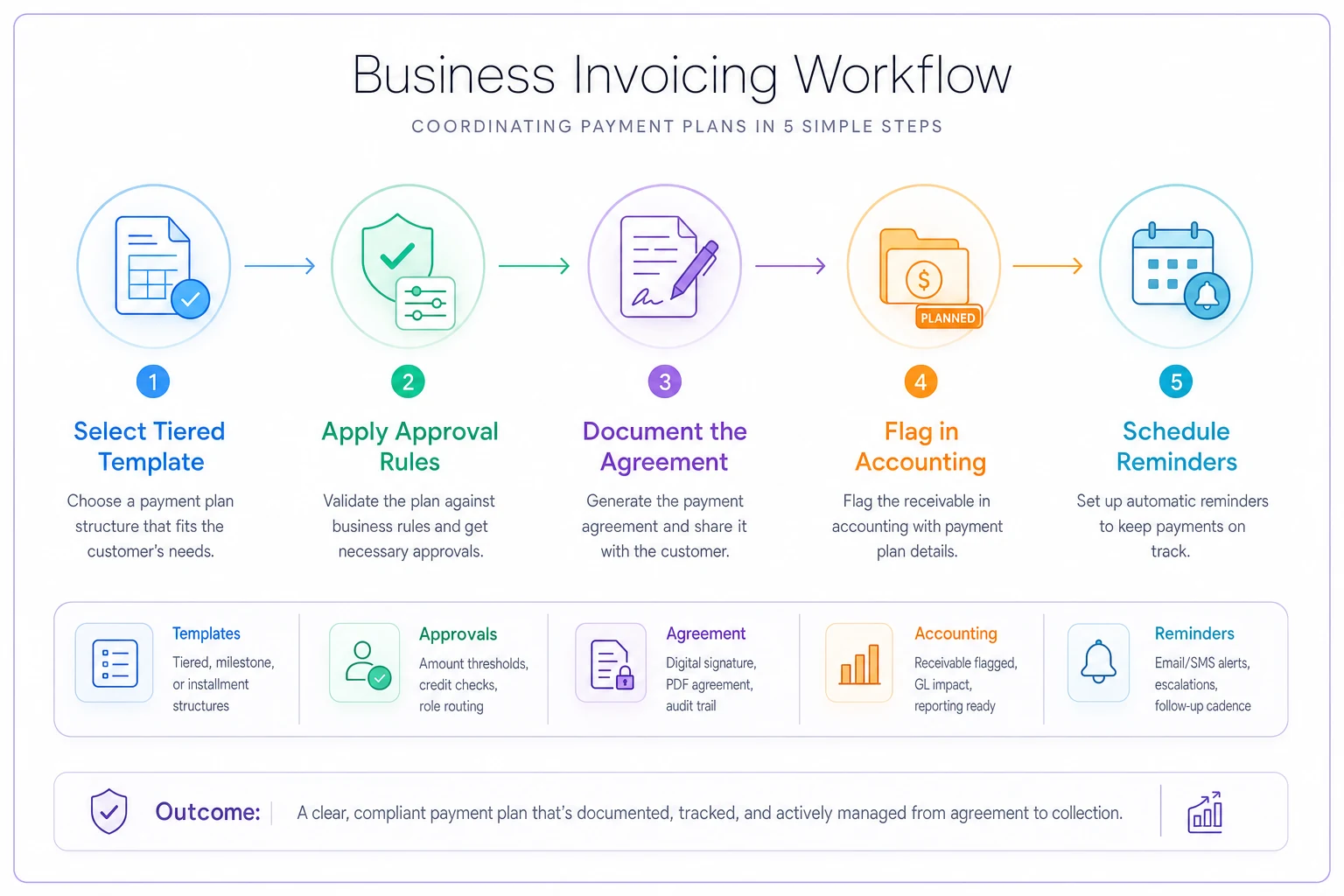
The templates and rules are what you decide; the system is what keeps you honest once you've decided.
A distressed client is a fork, but it doesn't have to be a hard one. Pre-build two or three tiers, know your approval thresholds, require something down every single time, and record the plan so your books tell the truth — and "I can't pay right now" stops being a threat to your cash or your relationship. It becomes just another thing you handle well.
The businesses that keep both their money and their clients through rough patches aren't the most generous ones. They're the ones who decided the rules before the pressure showed up.
Ready to streamline your billing process?
Join 5,000+ businesses using Billoly to reduce billing delays, automate payments, and grow revenue efficiently.